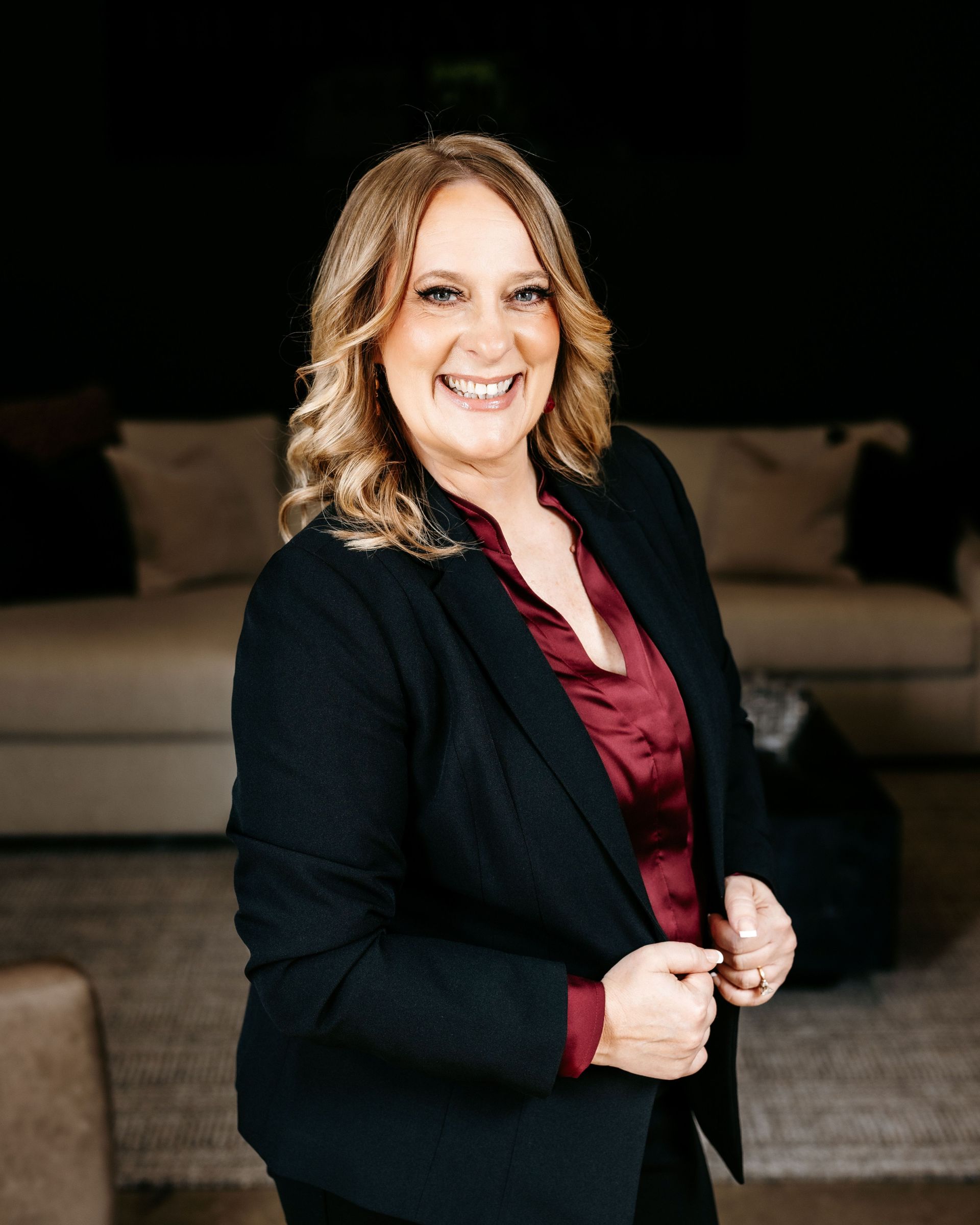
Aspire OT Founding Partner and occupational therapist, Kimberly Breeden, MS, OTR/L
One of the biggest surprises in my occupational therapy career wasn't something I learned in school, it was something I learned after my clients returned home. I have been practicing for over 30 years, most of that time in adult post-acute settings. Addressing ADLs, instrumental activities of daily living (IADLs), and health management has made up a large portion of my practice. Early in my practice, I addressed these occupations in the rehab gym simulating the environment to the best of my ability based on the client’s reports. We had great results and my clients frequently achieved an independent level of performance with these activities. Transitioning to home health was an eye-opening experience for me. I found that it was much more difficult to support clients to find a solution that they were satisfied with and that worked well for them in the context of their own homes or living environments than it was in the clinic. Research and continuing education have taught me a lot, but what has been the most helpful has been the practical tips and tricks that I learn every day from clients, co-workers, families and other OT practitioners.
Empty space, drag to resize
As a new practitioner, I graduated from OTA school well equipped with answers to the occupational challenges that my clients faced. I had the privilege to attend a program that provided me with an abundance of strategies and interventions for addressing occupational engagement. Our current academic programs have a variety of comprehensive textbooks that provide education about specific strategies and interventions. For new and current practitioners, the Occupational Therapy Practice Framework: Domain and Process Fourth Edition provides a solid foundation that guides OTs and OTAs in professional reasoning to support engagement in occupations. With all of that, why don’t we as OT practitioners have all the answers?
The OTPF-4 also recognizes that occupations are specific to the client, meaning that each client is an individual; therefore the way they engage in occupations will be unique. The reality is that no OT practitioner will ever have all the answers because each client requires their own unique approach. Those approaches may include commonly used strategies and techniques but may also require technology that has just been created or is too expensive for the client.
Empty space, drag to resize
Our Education is Only the Beginning
As a new practitioner, I graduated from OTA school well equipped with answers to the occupational challenges that my clients faced. I had the privilege to attend a program that provided me with an abundance of strategies and interventions for addressing occupational engagement. Our current academic programs have a variety of comprehensive textbooks that provide education about specific strategies and interventions. For new and current practitioners, the Occupational Therapy Practice Framework: Domain and Process Fourth Edition provides a solid foundation that guides OTs and OTAs in professional reasoning to support engagement in occupations. With all of that, why don’t we as OT practitioners have all the answers?
The OTPF-4 also recognizes that occupations are specific to the client, meaning that each client is an individual; therefore the way they engage in occupations will be unique. The reality is that no OT practitioner will ever have all the answers because each client requires their own unique approach. Those approaches may include commonly used strategies and techniques but may also require technology that has just been created or is too expensive for the client.
Empty space, drag to resize
Real Life Is Messier Than the Classroom
Why was working in home health an eye-opening experience? I found that there was a discrepancy in my clients’ actual performance at home versus the documented status in the inpatient setting. I think that it is was partly due to the fact that there were so many additional factors that I had not considered or observed in the clinic. When I had the opportunity to work with several clients in both inpatient and home health, I was surprised at how many clients were not actually independent once they returned home for a variety of reasons such as environmental barriers we had not identified or their previous roles, habits and routines that I had not fully considered, or simply because I had run out of ideas.
Resource-associated barriers also played a role in goal achievement. I often found that if recommended adaptive equipment or assistive devices were not covered by insurance, they were not obtained.
What I realized is that identifying a solution is not the end of the process, but may pose additional challenges. For example, identifying that a reacher would improve engagement in laundry tasks may not be the end of the process. If the client is not able to afford a reacher, then navigating options to obtain a reacher will be indicated. If there are no viable options for getting a reacher, identifying alternative reaching aids or even a new options may be indicated.
Empty space, drag to resize
Where the Best Ideas Often Come From.
There is no doubt that experience has improved my occupational therapy practice and client outcomes, but I can only take credit for a small amount of the things I have learned through practice. Most of the practical knowledge I have gained over the years has come from what my clients, client families, coworkers and other OT practitioners have taught me. They have been so gracious to share with me their ideas, success stories and knowledge of assistive devices, adaptive equipment, strategies and technology for addressing occupational challenges.
Empty space, drag to resize
Every Practitioner Has Clinical Pearls
I have had the privilege to work with and meet some of the most amazing OTs, OTAs and students throughout my career. Words cannot express the value that I have found in the times that I have had the opportunity to problem solve with other OTs and OTAs. As OT practitioners, we all have different experiences and perspectives. Problem-solving sessions create the perfect environment where magic happens. For Niccole and me, this is another example that as OT practitioners: We Are Better Together!
Empty space, drag to resize
Building a Profession That Learns Together
Niccole and I have also experienced this magic during our courses when OT practitioners begin to share and support one another. Niccole and I saw the value in our clinical practice in working with other OT practitioners and the value of OTs and OTAs sharing their knowledge and experience during our webinars. This led us to create a different type of continuing education offering. Our Tried and True Practitioners Teaching Practitioners Series provides the opportunity for OTs, OTAs and students to learn proven and effective solutions and strategies from each other while earning CEUs. I cannot think of a continuing education format that aligns more closely with our profession.
Empty space, drag to resize
Looking back over the past 30 years, I realize that some of the most valuable interventions I've ever used didn't originate with me. They came from clients who adapted occupations in ways I never would have imagined, colleagues who generously shared their favorite clinical pearls, and practitioners who believed that our profession grows stronger when we learn from one another.
If you find yourself in a situation where it is difficult to navigate a challenge in your practice, I encourage you to reach out to your OT community. Another OT practitioner’s experience may be the answer you were looking for. If you do not have an OT community or you want to experience a different type of continuing education experience, you may want to consider joining the Aspire OT community for a Tried and True webinar or workshop.