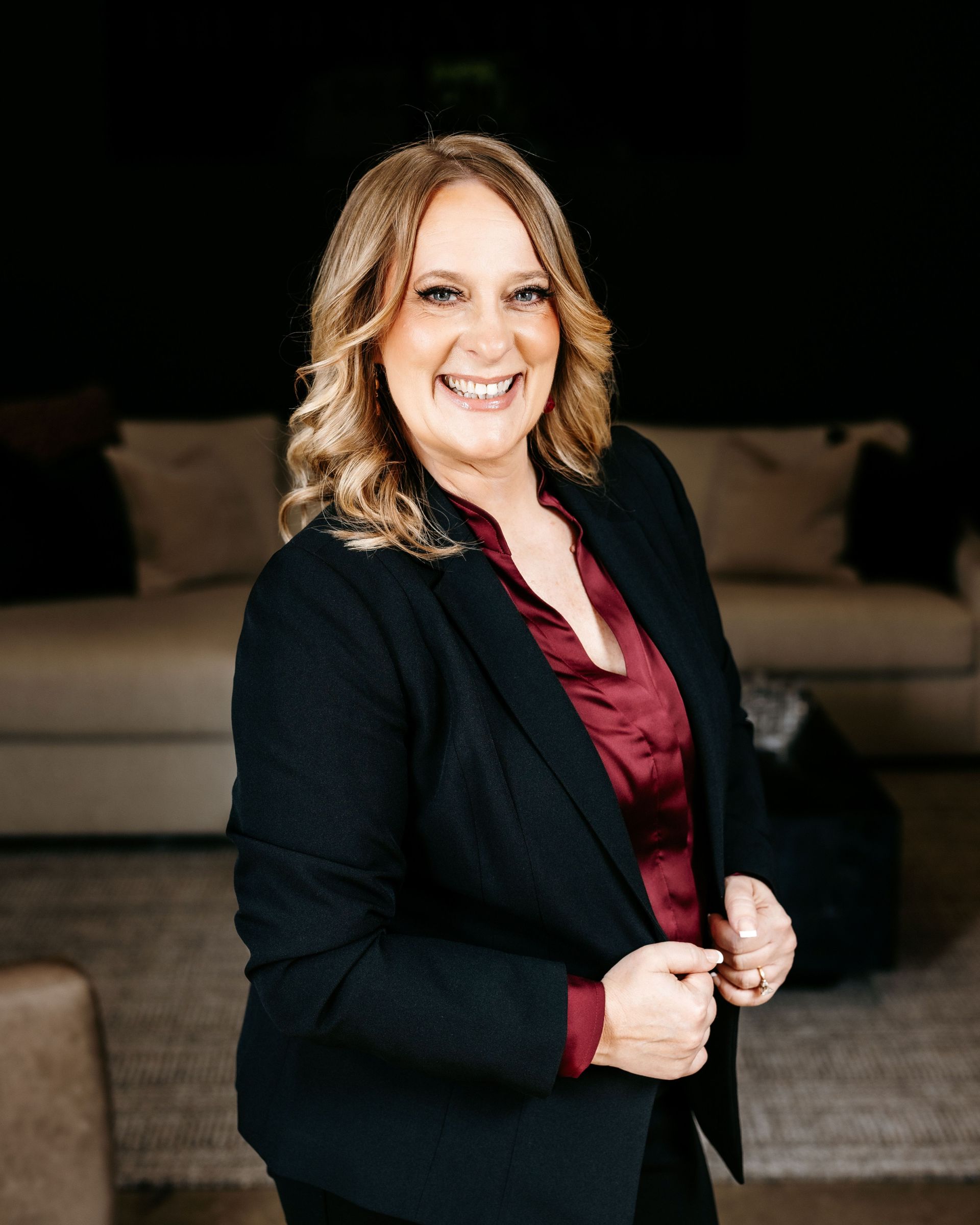
Aspire OT Founding Partner and occupational therapist, Kimberly Breeden, MS, OTR/L
Have you ever been asked a question on the spot and given an answer, but later, after thinking about it, thought to yourself, “Why didn’t I think to say that?”
That happens to me all the time, but the most recent was when Niccole and I were being interviewed. I was asked the question, “What did you learn about being a leader when you were in management that you hope to bring to your work in Aspire OT?”
Empty space, drag to resize
To give you some background, prior to completing the Belmont University bridge program, I had the amazing opportunity to serve for 12 years in management and administrative roles at the facility, corporate, and health system levels. During my time in contract rehab services management, I was responsible for facilities in multiple states.
Our client facilities varied from large corporate systems with established and robust policies and processes to privately owned facilities. I also had the opportunity to manage within a large health system and later serve as a clinical team leader. These experiences gave me exposure to a lot of different situations as well as processes for addressing issues.
Empty space, drag to resize
Only One Aspect of Leadership
Back to the interview, my answer was honest and truthful. I said that being a manager taught me the importance of gathering all the facts before making a decision or taking action. This can mean making sure to thoroughly review payment guidelines, policies and procedures, or rules and laws. It can also mean interviewing everyone involved in a situation and taking care not to jump to conclusions. In the interview, I related that knowledge to using evidence and best practices to inform occupational therapy services.
I do think that this is important for being effective in organizational leadership as well as professional and community leadership roles. But that is only one of the practices that I like to discuss when I am involved in conversations about leadership.
Empty space, drag to resize
My Experience in Leadership
My career was almost the opposite of most clinical managers because I served in those roles in the first half of my career, which has given me a lot of time to reflect on what I was able to accomplish and what I would do differently. I wish that I was the type of person who could focus on my successes more than my failures, but that is not who I am. I realize that this does drive me to look for ways to improve and advance. I have also found that sharing failures is often more beneficial in helping others avoid the same mistakes than sharing my successes.
My time in management was a period of significant growth, both professionally and personally. I learned so much during that time, mostly through mistakes. That time was filled with discovering things that I should not do again and a few strategies that would shape my success. The most difficult part of being a manager or leader was not developing good processes or plans but executing them successfully. The most significant thing that I learned was that well-crafted and thought-out processes and procedures do not mean a thing if they are not successfully implemented.
Years ago, I just assumed that once I came up with a good plan, the hard part was over. What I found was that implementing a good plan does not guarantee that the desired outcome will be achieved. As an OT practitioner, this should have been clear to me from the beginning because most plans depend on humans to carry them out. I love humans. I am fascinated by humans and human behavior, but let’s face it: humans are not always easy.
Empty space, drag to resize
Implementation is the Key
In my opinion, once a plan is established, the true test of a leader is communicating the plan effectively and facilitating a group of humans to participate and put the plan into action successfully. In the past, I was often challenged to address the same situation in different facilities. My logical mind told me that when I was presented with the same problem, the same plan and execution would produce the same outcomes. I quickly found that not to be the case. As an OT practitioner, this should have also been obvious to me. Just like our clients, each facility and department has its own “client” factors to consider. To make each facility and department successful, it was important that I tried to understand the unique factors affecting them.
This realization of how tough implementation can be caught me off guard as a new manager. When I look back, I think it is because there are so many discussions about leadership, and they all seem focused on having a vision, being supportive and encouraging, and developing leadership skills. What those conversations typically do not convey is that talking about something and doing something are two totally different things. Being supportive and encouraging and having a vision are very important strategies, but they have little value if they are not paired with the ability to execute the vision and initiatives.
Empty space, drag to resize
A Leadership Work In Progress
Understanding that the team possesses most of the talent, knowledge, and skills needed to bring the initiative to fruition was an important realization. Providing an environment that supports the team in working to its full potential is the most important part of being a leader. I have to stop here for just a moment. Full disclosure: I am a work in progress. I have not yet mastered this. Frankly, I am not sure I ever will.
I struggle with so many aspects of creating the environment and letting the team put the strategy into action. One of the reasons is that I do not delegate well. I often want to make sure that I am a good teammate, and I tend to overcontribute. I also try to take more administrative responsibilities off the team when, in fact, some team members may want to take on those responsibilities. I think there is always that part of me that is afraid of not being involved enough. And to be totally honest, I do not walk the line very well between accepting the responsibility I have as a leader and understanding that, ultimately, the team is the most impacted by the outcome.
To me, it is like the OT process: you create an evaluation with a beautiful plan and goals (hopefully), but that plan has little value unless the client participates, benefits from the plan, and achieves the goals.
Oftentimes, we find ourselves facing challenges with clients when nothing is going as planned. We may be using strategies we have used before that produced good outcomes, but they are not working well now. As we develop our practice skills, we gain the ability to become more effective in these types of situations. Not because we had a vision, not because we had a good plan, but because we learn to better deliver our interventions and we are focused on achieving the goal.
Empty space, drag to resize
Leadership Seems Glamorous
I see so much information shared about leadership on social media, and frankly, a lot of it frustrates me. In my opinion, most of what I see focuses on all of the attributes of a good leader but rarely focuses on what effective leaders actually do or contribute to the organization or team that leads to success. We seem to overlook the results and focus more on who is directing the plan. Much of what I see seems to focus on the "who" instead of the "how" or focus on the "one" instead of the "collective".
Empty space, drag to resize
The Real Challenge in Leadership is Actually Taking an Idea and Making it a Reality
Again, back to the interview. When asked, “What did you learn about being a leader when you were in management that you hope to bring to your work in Aspire OT?” what do I want to say? I want to say that I have learned that coming up with a good idea is only a small part of the process of achieving a goal. I have learned that it is easy to give people information or tell them what to do. Anyone can do that. The real challenge is actually taking an idea and making it a reality. OT practitioners do this every day in every setting they work in. I hope that Aspire OT is able to provide spaces to help OTs, OTAs, and students take their ideas and knowledge and implement them in ways that help their clients, grow their job satisfaction, and help them achieve their professional goals. It should be less about "I" and more about "we". The focus should not be on what everyone thinks of you as a leader, but what progress is being made toward the collective goal. To put it simply, leadership is not a speech but an outcome. It is not a popularity contest, but an opportunity for the team to achieve something significant and tangible when everyone carries out their roles effectively. Leadership is not subjective or an opinion, I think it is objective and measurable.
Reading this, you may get the impression that I am giving advice on how to be a good leader. This blog could not be further from advice. Most everything that I have learned has been through mistakes and failures. Have I been able to effectively implement plans and processes at the corporate, system, organization, and department levels? Yes. When I reflect on those instances, I still see a lot of room for improvement. My experiences and perspectives are just one of many. My hope is that I improve a little bit every day and that sharing my failures and successes helps other OT practitioners achieve their goals by avoiding the mistakes I have made or considering a different perspective.